




Replacing missing teeth can help restore chewing function, speech and the appearance of your smile. However, there is no single tooth replacement option that is suitable for everyone.
If you have one or more missing teeth, your dentist may discuss dental implants, dental bridges or dentures with you. Each option works differently and has its own advantages, limitations, treatment requirements and maintenance needs.
Understanding how these options differ can help you prepare for a discussion with your dentist and understand why one treatment may be more appropriate for your individual needs.
What Are the Main Options for Replacing Missing Teeth?
The three commonly considered options are:
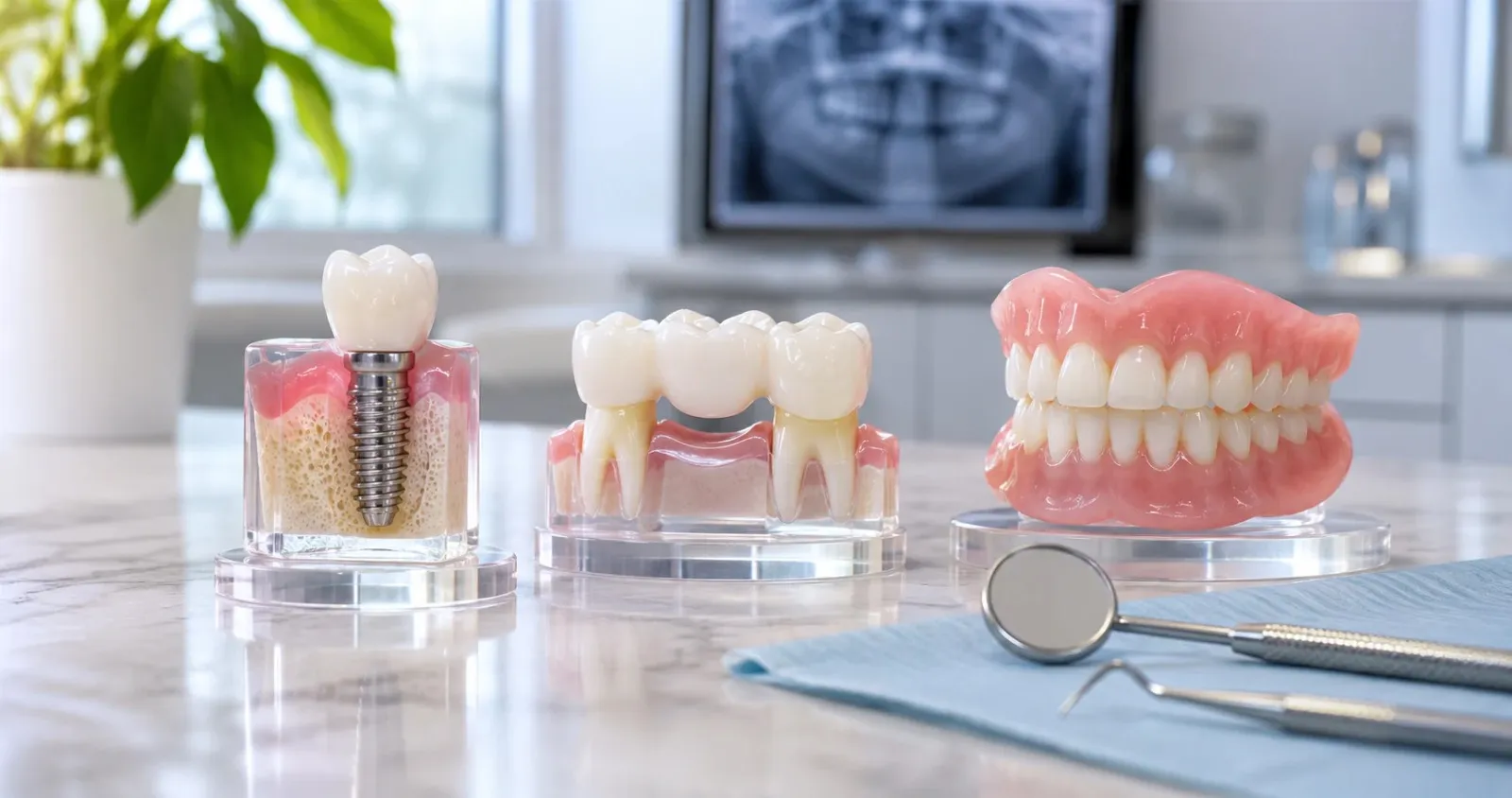
- Dental implants - artificial tooth roots placed into the jawbone and restored with a crown, bridge or denture.
- Dental bridges - fixed restorations that replace missing teeth by using neighbouring teeth or implants for support.
- Dentures - removable appliances used to replace several or all missing teeth.
The appropriate option depends on factors such as the number and location of missing teeth, the condition of your remaining teeth and gums, available bone, your general health, treatment preferences and budget.
What Are Dental Implants?
Dental implants are titanium fixtures placed into the jawbone to act as artificial tooth roots. Once the implant has integrated with the surrounding bone, it can support a custom-made crown, bridge or denture.
A single dental implant can be used to replace one missing tooth, while multiple implants may support several missing teeth or a full-arch restoration.
At Alpha Dental Group, implant planning can involve 3D CBCT imaging and digital scans to assess the available bone and plan implant placement.
You can learn more about the dental implant treatment process and what to expect during consultation.
Potential Benefits of Dental Implants
Dental implants may offer several benefits:
- They are fixed rather than removable.
- They can replace individual missing teeth without requiring a conventional bridge.
- They can provide support for implant bridges or dentures.
- Implants placed in the jawbone can help maintain the bone around the implant site.
- They can restore chewing function and contribute to a natural-looking smile.
However, implants require surgery and a healing period. Not every patient is immediately suitable for implant placement. Some patients with insufficient bone may require additional procedures such as bone augmentation or a sinus lift before implant treatment.
What Is a Dental Bridge?
A dental bridge is a fixed restoration used to replace one or more missing teeth. A traditional bridge generally consists of an artificial tooth, known as a pontic, supported by crowns attached to the natural teeth next to the gap.
Bridges can restore the continuity of the dental arch and help improve chewing function. They are fixed in the mouth, so unlike conventional dentures, they are not normally removed by the patient.
You can explore dental bridges and restorative options to understand how bridges may form part of a broader treatment plan.
Potential Benefits of Dental Bridges
Dental bridges may be considered when:
- One or more adjacent teeth are suitable to support the restoration.
- You want a fixed replacement rather than a removable denture.
- You want to replace a missing tooth without implant surgery.
- The supporting teeth are healthy enough to support a bridge.
A bridge does, however, rely on its supporting teeth. Your dentist will need to assess the condition of these teeth, your gums and your bite before recommending this option.
What Are Dentures?
Dentures are removable dental appliances designed to replace missing teeth and surrounding tissues.
Depending on how many teeth are missing, you may require a partial denture or full denture.
Partial dentures can replace several missing teeth while working around your remaining natural teeth. Full dentures are used when all teeth in an arch are missing.
Alpha Dental Group lists dentures as a treatment for partial or full tooth loss, with the aim of restoring oral function and appearance.
Potential Benefits of Dentures
Dentures may be suitable when:
- Several teeth are missing.
- Most or all teeth in an arch need replacement.
- You are looking for a removable tooth replacement option.
- Implant treatment is not suitable or is not preferred.
- A solution that can replace multiple teeth is required.
Modern dentures can be made to look natural, but they may require an adjustment period. Conventional dentures can also move during eating or speaking, particularly if the fit changes as the jawbone and gums naturally change over time.
For some patients, implants can also be used to improve the stability of a denture. Implant-supported dentures are different from conventional removable dentures because implants provide additional support and retention.
Dental Implants vs Bridges vs Dentures - How Do They Differ?
Although all three options can replace missing teeth, they differ considerably in how they are supported and maintained.
Dental Implants
Dental implants are placed into the jawbone and can support an individual crown, bridge or denture.
They are generally considered when a patient wants a fixed tooth replacement and has suitable bone and oral health. Implant treatment involves surgery and usually requires a healing period before the final restoration is attached.
Dental Bridges
Bridges are fixed restorations that use neighbouring teeth or implants for support.
They can provide a fixed replacement without implant surgery in suitable cases. However, the condition and position of the supporting teeth are important considerations.
Dentures
Dentures are removable and can replace multiple missing teeth or an entire arch.
They may be useful when several teeth are missing, particularly when fixed replacement options are not suitable or preferred.
Which Is More Comfortable - Implants, Bridges or Dentures?
Comfort can vary significantly between patients.
A well-planned dental implant with a properly fitted restoration can feel similar to a natural tooth because the implant is fixed in place.
A dental bridge is also fixed and does not need to be removed for routine daily use.
Dentures are removable and may initially feel unfamiliar. Some patients require time to adapt to speaking and eating with a new denture.
The fit, design, condition of the supporting tissues and individual expectations can all influence comfort.
Which Option Looks More Natural?
All three options can be designed to provide a natural-looking appearance.
Dental implants can support individual crowns that are colour-matched and shaped to complement the surrounding teeth.
Bridges can also be designed to blend with neighbouring teeth.
Modern dentures can be customised in terms of tooth shape, colour and gum appearance.
The final appearance depends on factors such as the restoration material, laboratory work, available space, the position of the missing teeth and your existing teeth and gums.
Which Option Is Better for Chewing?
All three options can improve chewing compared with having untreated missing teeth, although the experience can differ.
Because dental implants are anchored in the jawbone, implant-supported restorations can provide a stable foundation for chewing. Implant-supported dentures can also offer greater stability than conventional removable dentures.
Fixed bridges can restore chewing function when properly designed and supported by healthy teeth or implants.
Dentures can restore chewing function as well, although some patients may find certain foods more challenging, particularly if the denture moves or does not fit securely.
What About Jawbone Loss?
When a natural tooth is lost, the bone surrounding the former tooth root can gradually change.
Dental implants are placed within the jawbone and can help maintain bone around the implant site by providing stimulation through function.
Traditional bridges and conventional dentures do not replace the missing tooth root in the same way.
However, the effect of tooth loss and bone changes varies between individuals. Your dentist may use dental imaging to assess the condition of your jawbone when planning tooth replacement.
How Long Does Treatment Take?
Treatment time varies according to the option selected and your individual dental condition.
Dental Implants
Implant treatment generally takes longer because the implant needs time to integrate with the jawbone before the final restoration can be placed.
If bone augmentation or another preliminary procedure is required, the overall treatment period may be longer.
Dental Bridges
A conventional bridge can generally be completed over fewer appointments than implant treatment, although the exact timeline depends on the condition of the supporting teeth and the type of bridge required.
Dentures
The timeline for dentures depends on whether you need a partial or full denture, the condition of your mouth and the fabrication process. Additional appointments may be needed to assess the fit and make adjustments.
Your dentist can provide a more accurate estimate after examining your teeth and gums.
What Happens If the Missing Tooth Is Still Treatable?
Not every damaged tooth needs to be removed and replaced.
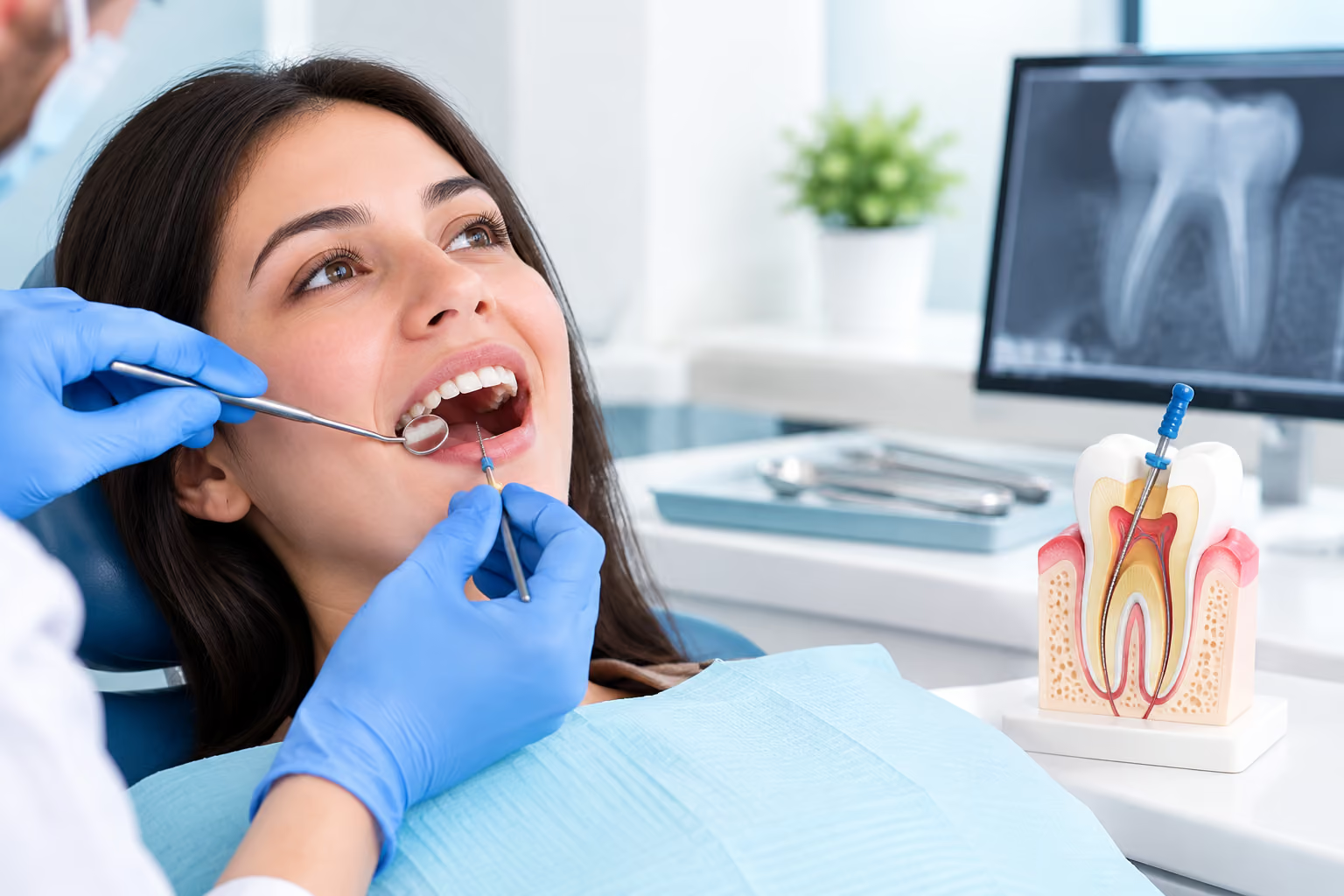
If a tooth has been damaged or infected but can still be preserved, your dentist may consider treatment such as root canal therapy instead of extraction.
For example, root canal treatment can sometimes help preserve a tooth that has an infected or inflamed pulp.
If the tooth cannot be restored, extraction may be recommended, followed by a discussion about replacement options such as an implant, bridge or denture.
Can Dental Implants Support Bridges or Dentures?
Yes. Dental implants do not only replace individual teeth.
Multiple implants can be used to support a bridge when several teeth are missing. Implants can also help stabilise certain types of dentures.
This can be particularly relevant for patients who have difficulty keeping a conventional denture stable.
Alpha Dental Group also offers implant-related treatments such as All-on-4 dental implants, implant bridges and implant-supported solutions.
The suitability of these approaches depends on the number of missing teeth, bone availability, bite, gum health and overall treatment requirements.
Does Dental Implant Treatment Always Require Bone Grafting?
No.
Some patients have sufficient bone volume and density for implant placement without additional bone augmentation.
However, bone can be lost following tooth extraction or prolonged tooth loss. If there is insufficient bone for predictable implant placement, a dentist may recommend bone augmentation or a sinus lift depending on the location and amount of available bone.
A CBCT dental scan may be used to assess the three-dimensional structure of the jawbone and surrounding anatomy during implant planning.
How Do You Choose Between Implants, Bridges and Dentures?
There is no universal option that is right for every patient.
Your dentist may consider:
- How many teeth are missing
- Where the missing teeth are located
- The condition of your remaining teeth
- Gum health
- Jawbone volume and density
- Your bite
- General health and medical history
- Whether you prefer a fixed or removable restoration
- Treatment time
- Maintenance requirements
- Your budget and financial considerations
A detailed examination is important because two patients with the same number of missing teeth may still require completely different treatment plans.
Can Dental Implants, Bridges and Dentures Be Combined?
Yes. Tooth replacement does not always involve choosing only one treatment.
For example, a patient with several missing teeth may have:
- An implant-supported bridge in one area
- A conventional bridge in another area
- A partial denture to replace additional missing teeth
Patients with extensive tooth loss may also be considered for implant-supported full-arch restorations.
The treatment plan should be based on the condition of the remaining teeth, gums, bone and bite rather than simply the number of missing teeth.
How Do You Maintain Each Type of Tooth Replacement?
Good oral hygiene remains important regardless of which replacement option you choose.
Looking After Dental Implants
Brush twice daily and clean around the implant and restoration carefully. Depending on the restoration, your dentist may recommend interdental brushes, floss or other cleaning aids.
Regular dental visits are important for monitoring the implant, gums and surrounding teeth.
Looking After Dental Bridges
A bridge needs careful cleaning around and underneath the artificial tooth. Your dentist or hygienist can demonstrate appropriate interdental cleaning techniques.
Regular check-ups can help monitor the supporting teeth and gums.
Looking After Dentures
Dentures should be cleaned regularly according to your dentist's instructions. They should also be checked periodically to make sure they continue to fit comfortably.
Your dentist can advise whether your denture needs adjustment, repair or replacement.
Dental Implants vs Bridges vs Dentures - Which Should You Choose?
The decision should be based on your individual dental condition rather than simply comparing the three treatments by price or appearance.
Dental implants may be considered when a fixed tooth replacement supported by an artificial tooth root is appropriate.
Dental bridges may be considered when neighbouring natural teeth or implants can provide suitable support for a fixed restoration.
Dentures may be considered when several or all teeth need replacing, particularly when a removable solution is preferred or other options are unsuitable.
Your dentist can explain the advantages, limitations, treatment requirements and expected maintenance of each option before you make a decision.
Replacing Missing Teeth at Alpha Dental Group Singapore CBD
At Alpha Dental Group, we provide a range of restorative and tooth replacement options for patients with missing or damaged teeth.
Our dental team can assess your oral health, remaining teeth, gums and available bone before discussing appropriate treatment options. Where implant treatment is being considered, digital imaging and 3D CBCT scans can assist with treatment planning.
Depending on your needs, treatment may include dental implants, bridges, dentures or other restorative procedures.
Our clinic is located at 20 Cecil Street in Singapore's CBD, making it convenient for patients around Raffles Place, Marina Bay, Shenton Way and Tanjong Pagar.
If you have recently lost a tooth or are experiencing problems with an existing bridge or denture, a dental assessment can help determine which replacement options may be suitable for you.
Conclusion
Dental implants, bridges and dentures can all be used to replace missing teeth, but they work in different ways and are suitable for different circumstances.
Implants are placed into the jawbone and can support crowns, bridges or dentures. Bridges provide a fixed replacement supported by natural teeth or implants, while dentures offer a removable solution for replacing multiple or all missing teeth.
The right option depends on factors such as your oral health, number of missing teeth, bone condition, remaining teeth, treatment preferences, maintenance requirements and budget.
If you are unsure which tooth replacement option is appropriate, a comprehensive dental assessment can help you understand your choices and the treatment involved.
Frequently Asked Questions
Are dental implants better than bridges or dentures?
Dental implants, bridges and dentures have different advantages and limitations. The appropriate option depends on your oral health, number of missing teeth, available bone, remaining teeth, treatment preferences and individual circumstances.
Are dental implants suitable for everyone?
Not necessarily. Implant suitability depends on factors such as bone availability, gum health, general health and the condition of the mouth. Some patients may require additional procedures such as bone augmentation before implant placement.
Can a dental bridge replace one missing tooth?
Yes. A dental bridge can replace a single missing tooth by using the neighbouring teeth for support, depending on their condition and suitability.
Are dentures removable?
Yes. Conventional partial and full dentures are removable. They can replace several or all missing teeth, depending on the type of denture required.
Can dental implants support dentures?
Yes. Implants can be used to provide additional support and retention for certain types of dentures. This can be an option for patients who have difficulty keeping conventional dentures stable.
How long does it take to replace a missing tooth with an implant?
Implant treatment generally involves several stages, including assessment, implant placement, a healing period and placement of the final restoration. The overall timeline varies depending on bone availability and individual treatment requirements.
What happens if I do not replace a missing tooth?
Leaving a missing tooth untreated can affect chewing and may allow neighbouring teeth to shift or opposing teeth to move into the space. Your dentist can assess your individual situation and discuss whether replacement is advisable.