



Bridges

Bridges replace missing teeth by anchoring artificial teeth to adjacent natural teeth or implants, restoring function and appearance.

Missing teeth can affect more than just appearance. Gaps in the dental arch may lead to difficulties in chewing, changes in speech, shifting of nearby teeth, and uneven bite forces. Over time, this can cause additional dental complications. One of the common treatment options to replace missing teeth is a dental bridge.

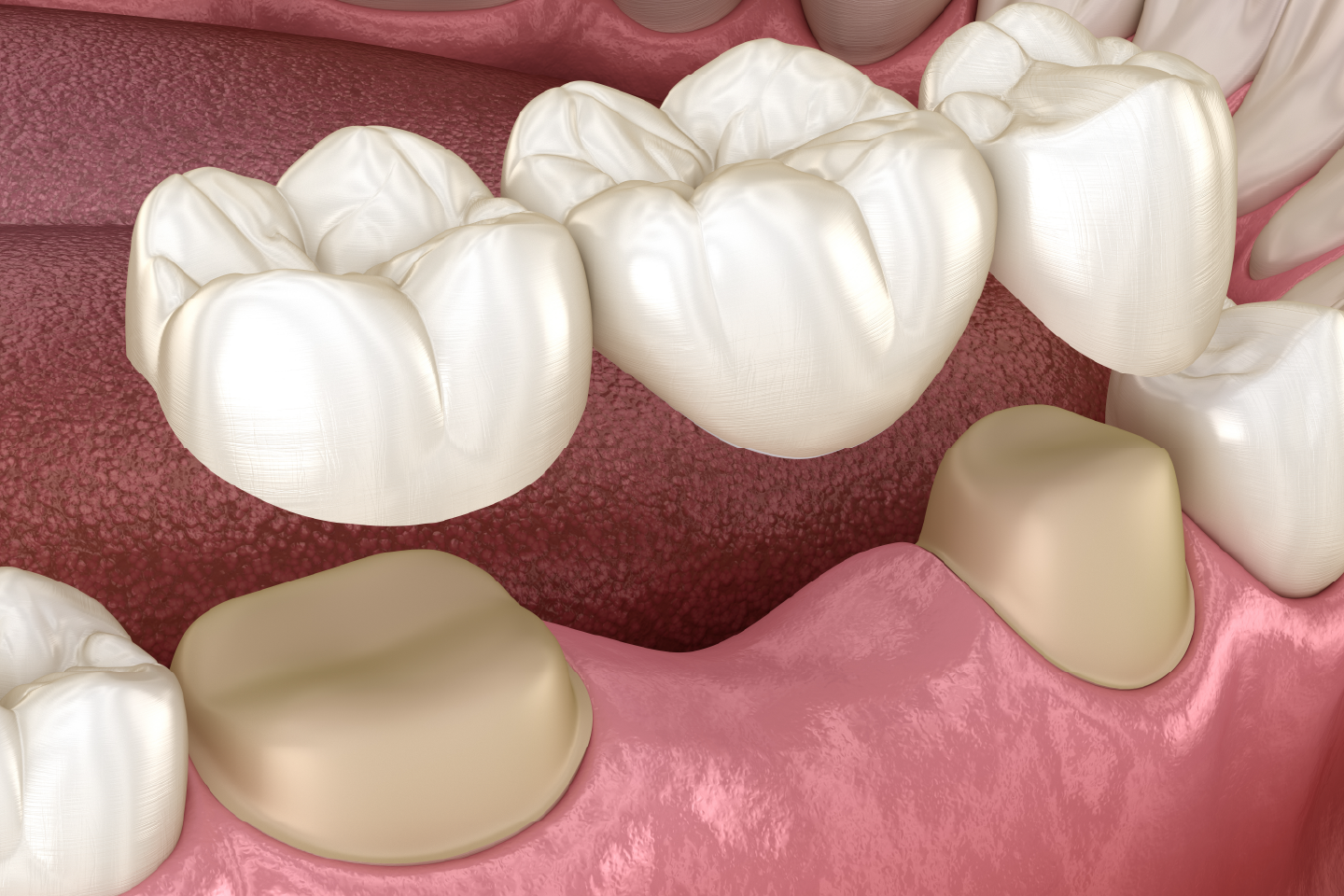
A dental bridge is a fixed dental restoration that replaces one or more missing teeth by anchoring an artificial tooth (or teeth) to the natural teeth or implants adjacent to the gap. At Alpha Dental, dental bridges are part of the range of restorative treatments offered to patients who require tooth replacement.

What Is a Dental Bridge?

A dental bridge literally “bridges” the gap created by missing teeth. It consists of three main components:

  1. Pontic – The artificial tooth (or teeth) that fills the space left by the missing tooth.
  2. Abutment teeth – The natural teeth or dental implants on either side of the gap that support the bridge.
  3. Connectors – The structures that attach the pontic to the abutments.

Unlike removable dentures, bridges are fixed in place and can only be removed by a dentist.

Why Are Dental Bridges Needed?

A dentist may recommend a bridge for various reasons:

  • To restore function: Missing teeth can make chewing less efficient. A bridge helps restore normal biting and chewing ability.
  • To maintain alignment: When a tooth is lost, the neighbouring teeth may drift into the empty space. This can lead to misalignment, bite problems, and increased risk of gum disease.
  • To support speech: Missing front teeth, in particular, can affect pronunciation. Replacing them with a bridge may help restore normal speech.
  • To preserve facial structure: Teeth support the facial muscles. Replacing lost teeth helps maintain a natural appearance and prevents the “sunken” look that can occur with multiple missing teeth.
  • To provide a stable solution: Unlike removable dentures, bridges are fixed in place and feel more natural during daily activities such as speaking and eating.

Types of Dental Bridges

There are different kinds of dental bridges. The choice depends on the location of the missing tooth, the condition of the surrounding teeth, and the patient’s overall oral health.

Traditional Bridge
  • The most common type.
  • Consists of a pontic anchored to crowns placed on the adjacent teeth.
  • Suitable when healthy teeth are present on both sides of the gap.
Cantilever Bridge
  • Supported by a crown on only one side of the missing tooth.
  • Less common and is usually used in areas where less chewing force is applied.
Maryland (Resin-Bonded) Bridge
  • Uses a metal or porcelain framework bonded to the back of adjacent teeth instead of crowns.
  • Considered a more conservative option since it requires less alteration of neighbouring teeth.
  • Often used for replacing missing front teeth.
Implant-Supported Bridge
  • Anchored to dental implants instead of natural teeth.
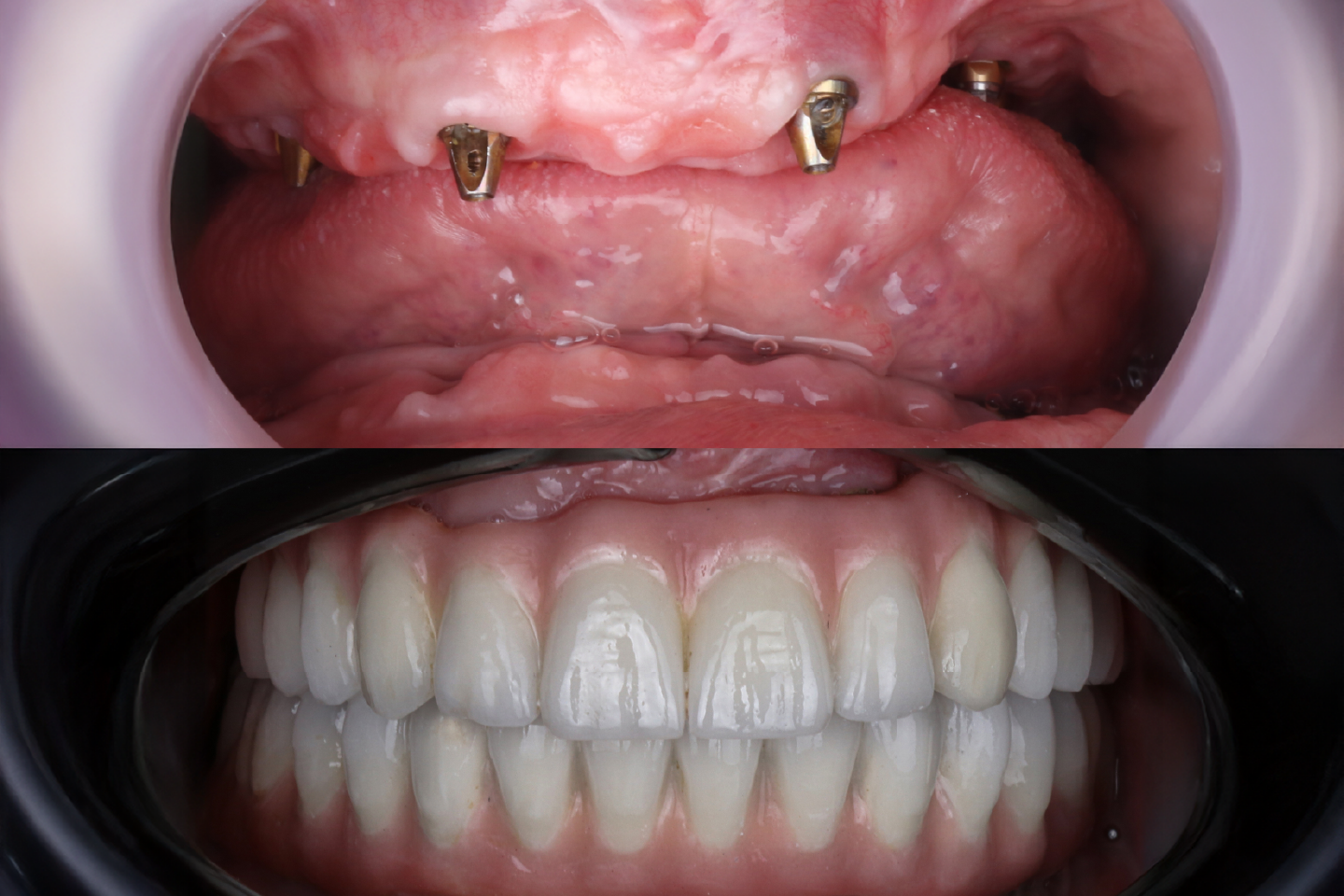
  • Recommended when multiple teeth are missing or when natural teeth are not strong enough to support a bridge.
  • Provides excellent stability and function.

The Procedure for Getting a Dental Bridge

Step 1: Initial Assessment
  • The dentist examines your teeth and supporting structures to determine if a bridge is suitable.
  • X-rays and impressions may be taken to assess the condition of the surrounding teeth and gums.
Step 2: Tooth Preparation (for traditional or cantilever bridges)
  • The abutment teeth are reshaped so that crowns can be placed over them.
  • In cases where abutment teeth are weak or compromised, other restorative work may be done first.
Step 3: Impressions or Scans
  • A detailed impression or digital scan is made of the prepared teeth.
  • This is used to create a model for the dental laboratory, where the custom bridge will be fabricated.
Step 4: Temporary Bridge Placement
  • A temporary bridge may be fitted to protect the exposed teeth and gums while the permanent bridge is being made.
Step 5: Permanent Bridge Placement
  • Once the permanent bridge is ready, it is checked for fit, bite, and aesthetics.
  • Adjustments are made as necessary before the bridge is cemented in place.

Benefits and Limitations of Dental Bridges


Benefits:
  • Restores chewing and speaking ability.
  • Prevents shifting of adjacent teeth.
  • Provides a fixed, stable replacement for missing teeth.
  • It can be fabricated to match the natural colour of your teeth.
  • Less invasive than implants, as surgery is not required.
Limitations:
  • Requires reshaping of healthy abutment teeth (in traditional bridges).
  • Not as long-lasting as implants; bridges may need replacement after several years.
  • May increase the risk of decay or gum disease around abutment teeth if not properly cared for.
  • Less suitable when multiple adjacent teeth are missing, compared to implant-supported options.

Risks and Considerations

As with any dental procedure, there are risks associated with dental bridges:

  • Tooth sensitivity after preparation of abutment teeth.
  • The bridge loosens or dislodges over time.
  • Fracture or wear of the bridge material.
  • Decay under crowns if oral hygiene is inadequate.
  • Gum disease around the supporting teeth occurs if plaque is not controlled.

These risks can be minimised with proper treatment planning and ongoing dental care.

Aftercare for Dental Bridges

Maintaining good oral hygiene and regular dental visits are key to ensuring the longevity of a dental bridge. Aftercare recommendations generally include:

  • Brushing teeth twice daily with fluoride toothpaste.
  • Using floss threaders or interdental brushes to clean under the bridge and around abutments.
  • Avoiding very hard foods that may damage the bridge.
  • Attending routine dental check-ups and professional cleanings.
  • Report looseness or discomfort to your dentist promptly.

With appropriate care, dental bridges can last many years.

When to Consult a Dentist

You may wish to consult a dentist if you:

  • Have one or more missing teeth.
  • Notice difficulty chewing or speaking due to gaps.
  • See shifting or tilting of nearby teeth.
  • Desire a fixed alternative
  • to removable dentures.

A dentist can evaluate whether a bridge, implant, or other treatment option is most suitable for your needs.

Conclusion

Dental bridges are a well-established method for replacing missing teeth. They restore function, help maintain alignment, and support overall oral health. The choice of bridge type and the treatment plan will depend on each patient’s condition, goals, and suitability for the procedure.

If you would like more information about dental bridges, you may contact Alpha Dental to arrange a consultation with our dental team.

Menu

WhatsApp